
Boiler Room Scams: Belgium Names Five Firms as Call-Centre Raids Continue
Global Anti-Scam Centre | November 2026
In the space of two days, Belgium’s financial regulator named five suspected boiler rooms, police in four European countries closed a cross-border call-centre investigation, and officers in Tashkent found ten people and 58 phones in a single apartment. Boiler room scams have not gone away. They have simply moved, multiplied and learned to look more professional.
What happened this week
Belgium, 20 November. The Financial Services and Markets Authority (FSMA) warned the public against five companies it says are not authorised to provide investment services in Belgium and which, on the information it holds, may be boiler rooms:
- Foresight Limited (foresightjp.co, foresightjp.com)
- Minerva Capital Investment Japan (minervajpn.co)
- Mulland Fraser (mullandfraser.com)
- Somerset Asset Management (somersetassetmanagement.com)
- TG Assets Management Japan (tgassetsjapan.com)
Three of the five present themselves with a Japanese identity, while the warning is aimed at the Belgian market. The FSMA notes that, in boiler room cases, payments are most often requested to bank accounts in Asia, and that company directors and managers are a particular target.
Ukraine, Czech Republic, Latvia and Lithuania, 19 November. Ukraine’s Office of the Prosecutor General announced the completion of a joint operation, codenamed “Connect”, against a network of call centres in Ukraine that targeted citizens of EU countries. Callers used mass-calling technology and number spoofing to convince people that their bank accounts had been compromised, then pressured them to move savings into so-called “safe accounts” or convert them into cryptocurrency. Sixteen people have been notified of suspicion, four of whom are internationally wanted, and 39 people have been extradited at the request of the partner countries.
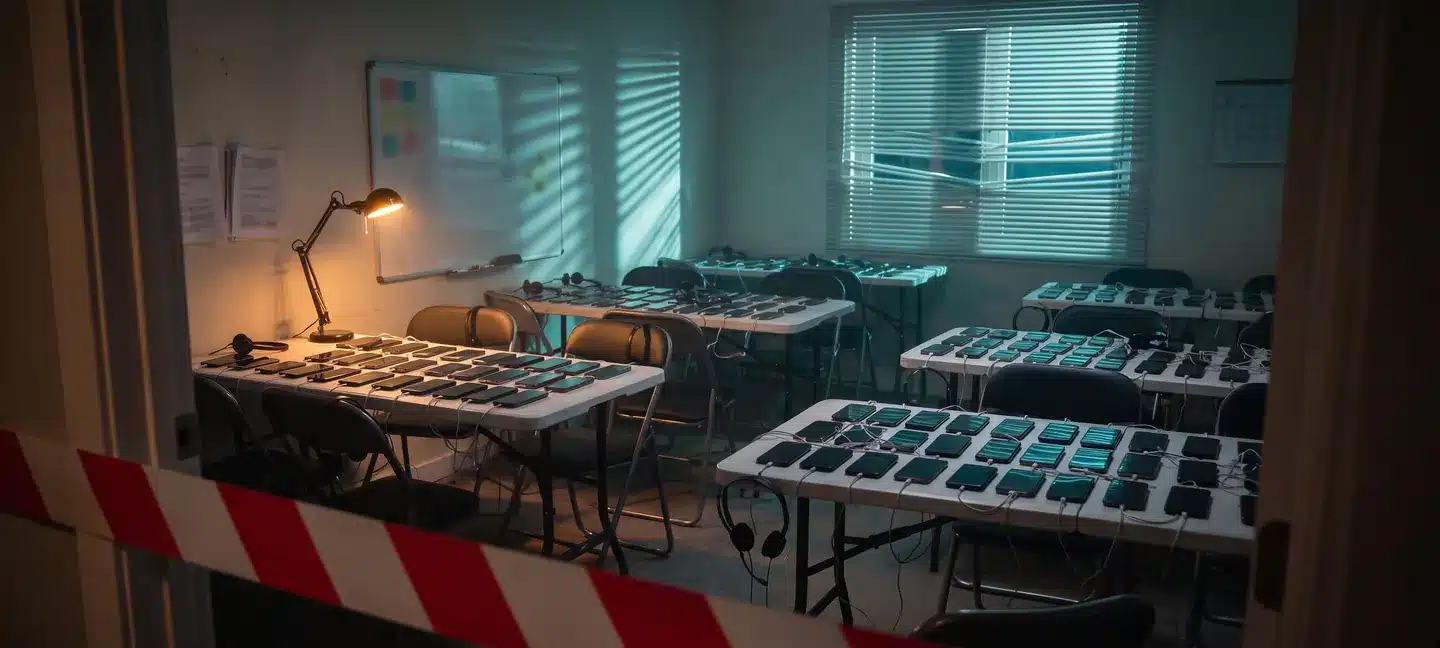
Uzbekistan, reported 20 November. Tashkent city police reported uncovering an underground call centre run by ten people from a flat in the Yashnabad district. According to the police account reported by local media, the group used messaging apps to gain the trust of people in European countries, offered “trading training” and counterfeit documents, then moved victims’ crypto assets into their own wallets. Officers seized 58 phones, eight laptops and three computers, and police put the crypto turnover at about 203,134 USDT, although outlets reported slightly different figures.
The Ukrainian and Uzbek matters are criminal proceedings at an early stage, and everyone involved is presumed innocent unless proven guilty in court.
Sources: FSMA warning, 20 November 2026; Office of the Prosecutor General of Ukraine, 20 November 2026; tafs.uz, 20 November 2026; Gazeta.uz, 21 November 2026.
What a boiler room scam is
A boiler room is an operation that cold-calls or messages people to sell investments that are fictitious or worthless, under heavy pressure. The FSMA’s description is a useful summary of the pattern: a professional-looking website and paperwork, a small first investment that quickly appears profitable, repeated requests to invest more, and then a demand for further payments or a sudden “loss” when the investor asks for their money back.
What has changed is the product. Boiler rooms once sold shares. Today the same calling floors offer managed accounts, fixed-term deposits, crowdfunding, crypto “training” and online trading platforms, and many work alongside impersonation scripts such as the fake bank security call seen in the Ukrainian case.
Warning signs to act on
- You did not ask to be contacted. An unsolicited call, email or message about an investment is a warning sign on its own.
- The firm’s home country does not fit. A “Japanese” firm calling Europeans, or a firm asking you to pay an account in a country with no link to it or to you.
- Your bank or “security team” wants you to move money. No genuine bank asks you to transfer savings to a “safe account” or into crypto.
- Early profits, then fees. Withdrawals that depend on paying a tax, release fee or “insurance” first.
- The name looks almost right. Boiler rooms often borrow or imitate the names of real, regulated firms and change names frequently.
How to check a firm that has called you
Hang up and check independently, starting from the regulator’s own website rather than any link or number the caller gives you. Search for the company name, its web address and the name on the bank account you are asked to pay:
- Belgium: the FSMA’s list of companies operating unlawfully in Belgium.
- Australia: the Moneysmart Investor Alert List and ASIC’s professional registers.
- United Kingdom: the FCA Register.
- Elsewhere: your local regulator and the IOSCO I-SCAN warnings database.
The absence of a warning does not mean a firm is authorised. As the FSMA itself points out, regulators may not yet have spotted a new operation. Our guide on how to check an investment platform before you invest sets out the basics. For an independent, human-reviewed opinion before you send money, GASC Verify checks a platform, company or phone number for US$199.
If you have already paid
Stop all further payments, whatever the caller says will happen if you do not pay. Contact your bank immediately using the number on your card, keep every record (call logs, numbers, emails, documents, payment receipts and wallet addresses), and report the matter to the fraud reporting body in your country. Be wary of anyone who then contacts you offering to get your money back. We explained why in our article on fake compensation letters and recovery scams.
GASC Investigator’s Assessment
In our assessment, this week’s three cases show the boiler room model at its most adaptable. The Belgian warning describes firms with a Japanese identity selling into Europe; the Ukrainian operation pairs investment selling with bank-impersonation calls; and the Tashkent flat shows that a calling floor can be ten people and a box of phones in a rented apartment. The common thread is distance: the caller, the brand, the bank account and the victim are deliberately placed in different countries.
These operations rely on borrowed credibility, the same patterns we have written about before. That includes names that imitate real firms, as described in our article on clone firm scams, polished certificates and paperwork, and paid or fake news coverage. A contact number that appears to be hosted or VoIP, rather than tied to a verified registered office, is a further risk indicator, as we explained in our guide to investment scam phone numbers.
Before paying any firm that contacted you first, check its name, address, phone number and the receiving account against regulator registers and warning lists. If you have already sent money, or a firm is now demanding fees before a withdrawal, request a confidential case assessment and we will give you a clear view of your options.
Where GASC fits
Global Anti-Scam Centre is an independent private investigation organisation. Our experienced investigators include former law enforcement detectives, former government intelligence professionals and experienced private-sector investigators, with international experience running investigations alongside local law enforcement. We investigate boiler room fraud, fake trading platforms and cross-border investment scams. We do not guarantee outcomes.
Request a Confidential Case Assessment
Verify us
Global Anti-Scam Centre (GASC) is an independent private organisation headquartered in Australia. We are not a government agency, regulator or law-enforcement body, and we are not connected with Scamwatch, the National Anti-Scam Centre (NASC) or the Global Anti-Scam Alliance (GASA). We will never contact you first offering to recover funds, and we cannot guarantee any particular outcome.
Latest Media Insights


